Another common view is that a full-time researcher does their leadership work in their own time — as if leadership were something bolted on to a full-time job. A long career becomes a balloon around the researcher, swelling over the years, carrying them comfortably through academic life.
We can probably all agree that leadership is the foundation of the work, and that a weak foundation makes for a poor house. Educational institutions often face a dilemma: can you be a researcher and a leader at the same time? What does a researcher say when you ask them, „Who are you?“ Do they answer that they are a leader, or a researcher?
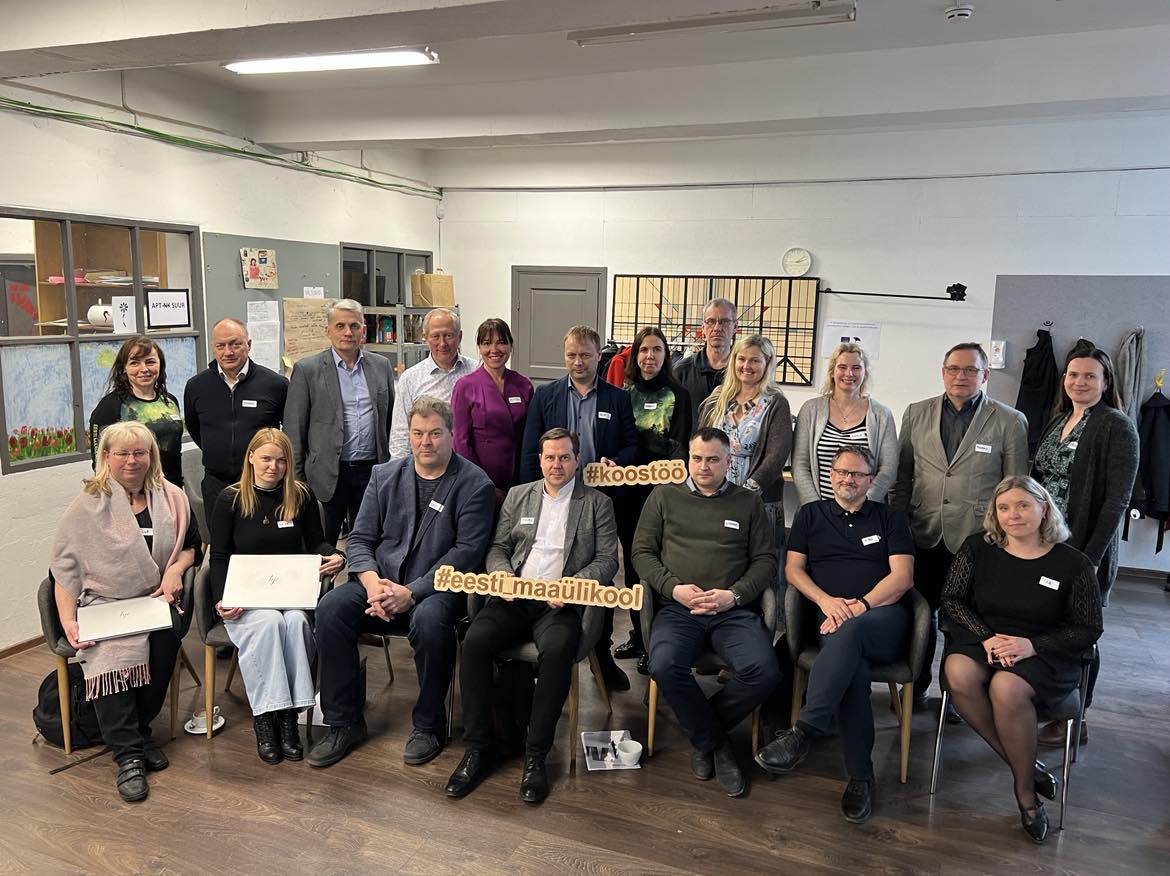
We recently wrapped up a great piece of work with the Estonian University of Life Sciences. To mark it, I sat down for a short interview with two people from the university: HR Director Veronika Krassavina and Chief Specialist for HR Development Kerli Liiv.
What was the main problem you wanted to solve with the training?
Veronika: We wanted to shift attitudes as well as values — so that we would start valuing leadership as an effective way to reach our goals and keep our people. We wanted people to see that it is the key to motivating, retaining and developing people. When it comes to succession, only good leadership will give us the people we need, with the right skills, who want to do their work well.
There’s an attitude around here that academic leadership is something special, when in fact it is ordinary people leadership. There is no such thing as „academic leadership“. People are people. While we were developing the leadership competency model for the university, we argued about this, and in the end we couldn’t find a single aspect that sets an academic leader apart from any other leader.
I’ve noticed that in institutions like hospitals and universities, leadership is defined through administrative work rather than through leading and developing people. That approach seems skewed from the outset to me. What do you make of it?
Veronika: Leadership and administrative work are different things. Leadership is first and foremost about leading people. Becoming a leader doesn’t mean more administrative work, it means more work with people. Leadership can improve the effectiveness of every unit. But it has to be learned and practised — it genuinely helps the whole university, and it means the strategic goals get achieved in a way that leaves people healthy.
Kerli: It all starts with leadership. Leaders need a contemporary approach and a grounding in theory. They have their own experience, but alongside that they need new knowledge and a shared space for leadership thinking across the university.
Veronika: If you look at the private sector and at how many leaders are trained there, the share of leadership training in universities is very small. There is another side to it, of course: the share of academic work is very large.
A researcher is probably quite hard to motivate to come along to a training course. How did you manage it?
Kerli: We had to invite people personally. The groundwork was already done — we had built a leadership competency model. That became the bridge between the two.
Researchers don’t really want to be leaders, do they?
Veronika: You can’t say they don’t want to be leaders at all. They lead research groups in any case. You can’t be a professor without leading anyone.
That said, there are top researchers who lead their field or their unit but don’t take the role seriously enough. Some will admit outright that they aren’t a good leader and that they have neither the time nor the motivation to become one.
In the end it comes down to this: if someone decides to be a top researcher but not a good leader, that’s a choice they can make — but the team pays for it. So with this training we wanted to give our people the chance to be a good leader and a top researcher at the same time. Researcher and leader are not separate roles for separate moments. They support each other and help reach the goals together. Everything is teamwork these days.
What is the most important thing you took away once the programme ended?
Kerli: Ideally, I’d like everyone who couldn’t take part this time to go through the training in the future. One colleague concluded that leadership is worth doing, and that people really are worth leading. The demo coaching session was what sparked it. It struck him that once you let the genie out of the bottle and start leading, there’s no putting it back. Another colleague decided to start holding development conversations.
Veronika: What mattered was realising how important feedback is, and giving people a better opportunity — handing the choice and the decision to the employee themselves. You have to talk to the person and ask them questions.
Kerli: There was also a lot of interest in the skill of asking the right questions — in a way that opens people up and gets them thinking.
What will you do next?
Kerli: Next we’ll be working on values.
Veronika: In the autumn we’ll draw up a new development plan. We need to breathe life into the leadership competency model. Everything we do that touches on leadership should be aligned with it. It should become a natural part of our leadership life — from recruitment right through to feedback.
Leaders often aren’t aware of, or don’t stop to consider, what leadership actually is. It starts with leading and governing yourself. Only then can we go on to lead others. Leadership is not a bolt from the blue — it is serious work, on yourself and with others. Work on managing emotions, developing people, seeing the bigger picture and, in the end, delivering the results.
Feedback on the training from Endla Reintam, Vice-Rector for Academic Affairs at the Estonian University of Life Sciences:
First, setting goals for meetings and summing them up precisely, so that everyone understands the tasks the same way. With that last part, it has often gone like this: you think you’ve reached an agreement, but everyone leaves the meeting having understood it differently. You get a better result if you state the agreement and the tasks clearly at the end of the meeting and then actually send a reminder or a memo by email.
The second thing I definitely use is asking guiding and supportive questions to arrive at the most suitable outcome. Third — watching my own behaviour and making sure that, when a result has to be reached, everyone else has the same information I do. I also avoid passing judgement where it isn’t expected of me.
Feedback on the training from Rando Värnik, Professor of Rural Economics:
Ülikool kui organisatsioon on mitmetahuline ja -tasandiline! Selleks, et mõista erinevate tahkude rolli ja olulisust, on vajalik tunnetada tervikut, mille eksistents ja jätkusuutlikkus sõltub võimalikust sünergiast ning üksteisemõistmisest. Inimestesse panustamine muutub ülikooli jaoks lähiaja suurimaks väljakutseks ja selleks peab muutuma organisatsioon.
Organisatsioonis on akadeemilistel ametikohtadel väga kõrged nõudmised. Kuidas aga samal ajal selle juures tagada põlvkondade vahetus. Jätkusuutlikkus erinevatel tasanditel piiratud rahaliste motiveerimisvõimaluste ja projektipõhisuse juures vajab täit tähelepanu ning eesmärkide seadmist. Koolitusel olid koos ülikooli erinevad tahud (osakonnad, õppetoolid, instituudid) ning tasandid (juhatajad, akadeemiliste vastutusvaldkondade õppetoolide juhid – professorid) kui peamised otsustuspunktide esindajad.
Ülikoolil on ees uue arengukava koostamine ning oma missiooni mõtestamine ja visiooni kujundamine. Seetõttu on äärmiselt õige aeg tuletada meelde “meie” väärtusi ja otsida nendest tuge järjest keerulisemas globaalsüsteemis nii oma koha kui ka olemasolu õigustuse kontekstis. Sellisel juhul on hea omada kõrvaltvaataja pilku ja metoodilist tuge. Seda kõike pakkus koolituse läbiviija omapärasel ehk tasakaalukal, sõbralikul ning kaasaval moel.
Otsustajate kokkutoomine ning üksteisele meeldetuletuse pakkumine: me ei võistle organisatsiooni sees mitte omavahel, vaid konkurendid asuvad väljaspool ning üksnes ühine jõud aitab meil muutuda veelgi tugevamaks. Lisaks võib tõdeda, et mitte ükski lüli pole üleliigne või vähemoluline uute suundade ja sihtide seadmisel.
Vahel unustame ära, et meie vastutada on tervikuna ülikooli hea maine ja vastava keskkonna kujundamine. Mida paremini suudame juurde luua meeskondi, seda kiiremini suudame ka võetud eesmärke saavutada.
If you would like to take your company’s leadership culture to the next level with Nobel People, get in touch!