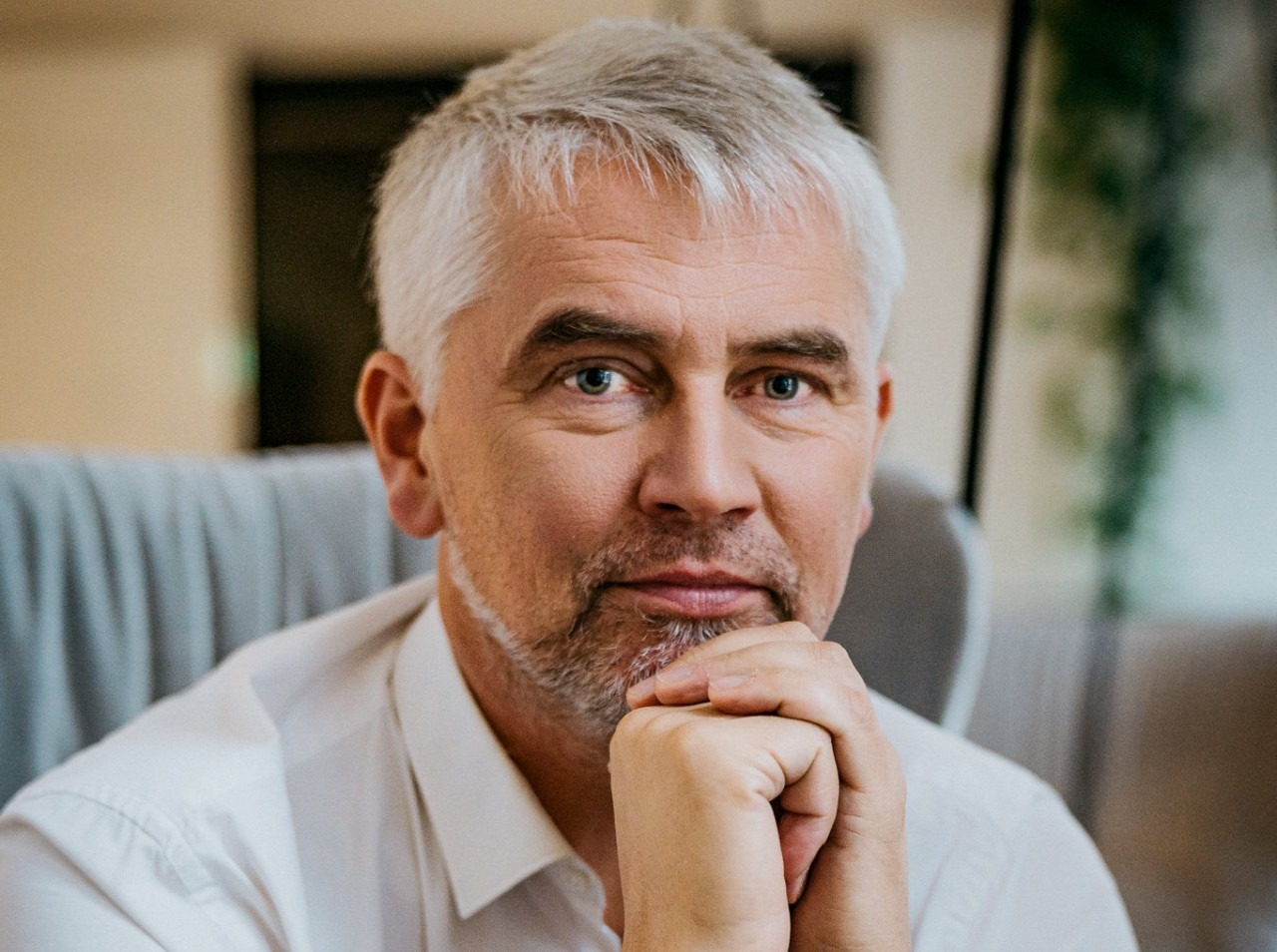
Their work has a direct effect on the life of every person in Estonia. In January 2025 we spoke with TEHIK’s director Margus Arm to look back at the past year and at this project.
You decided to refresh your values. Why?
TEHIK’s values were set in 2017. Back then we were a fairly small organisation that was only just getting started, with around 70 people. Today there are 220 of us, and over eight years many of the original team have moved on. So we have changed a great deal, both in our people and in our strategic choices. All of that called for a thorough review of our culture and values. Our area of responsibility has also widened considerably over the years — the scope and importance of the systems we manage have grown, for the state and for people alike. We wanted to give our team a clear direction and the chance to think together about who we are, what we stand for and how to do all of it even better.
What were your expectations of the values renewal process?
We wanted the organisation to be involved as fully as possible, so that we would reach a shared understanding together. Creating something together also makes it easier to embed together. We knew from the start that we did not want to do this on our own — we wanted professionals alongside us.
Brené Brown (author of leadership bestsellers, among them “Dare to Lead”) has shown in her research that organisational values mostly do not work very well. More precisely, that values act as genuine leadership tools in only 10% of companies. From my own experience, I can confirm the same holds true in Estonia. What are you doing to be among that 10%?
We have worked on values, leadership principles, vision, mission and strategic goals. Now we are tying it all together into one whole. Next we work with a wider circle of leaders — training, communication, embedding it in everyday work. These themes are our focus for the whole of 2025. We are linking them to annual development conversations, work plans, recruitment and so on. But this work is never really finished.
What has been the greatest pleasure so far?
That people came along with real energy, wanted to contribute and did the thinking together. It is a pleasure to see us taking the time to work on our culture deliberately. And along the way we had it confirmed that the organisation needed this work.
How did the organisation take to the new values?
At TEHIK we get a lot of things started, but on many internal organisational development topics we sadly don’t always reach a result. The organisation expects us to make clear progress on values and culture. So from the very start we focused on making sure the values would not be just words on a wall, but a real part of TEHIK’s DNA.
What was the hardest part of this work?
Deciding what to leave out. Our culture holds many important things that people genuinely value. And of course, different people and different units hold different values dear. Try to find too much common ground and the values become too general. Now try, in that situation, to bring together the values that are truly right, unique and meaningful.
The other hard part of this work is taking criticism. When we talked about values, we tried to be as open as possible, including about our weak spots. Hearing those aired publicly in front of the whole organisation is not comfortable for a senior leader. But you have to cope with it, and in the end it makes both the leader and the organisation stronger.
What were you afraid of?
That people might not come along with it. That they would ask why we were wasting time on this – just let us get on with the work. That was the attitude we feared. Wherever we could, we combined the values work with other team activities to use everyone’s time sparingly. Happily, that worry never materialised at all. It was a real joy.
What have you learned along the way?
Every opinion matters. Hear people out, stay open. Don’t criticise. For me it was a very important realisation that trust is in good shape at TEHIK. People dare to come forward and have their say.
Not everyone needs a say in everything. Involve the organisation very widely, but narrow the circle of discussion and decision-making at the right moment so that you actually reach decisions. Have the courage to make the call at the end, then go back to people and explain why we did it this way. You don’t always have to reach consensus with everyone on everything.
Values also help you on the outside. They help us get clear on who and what we are, and communicate that more clearly to our clients.