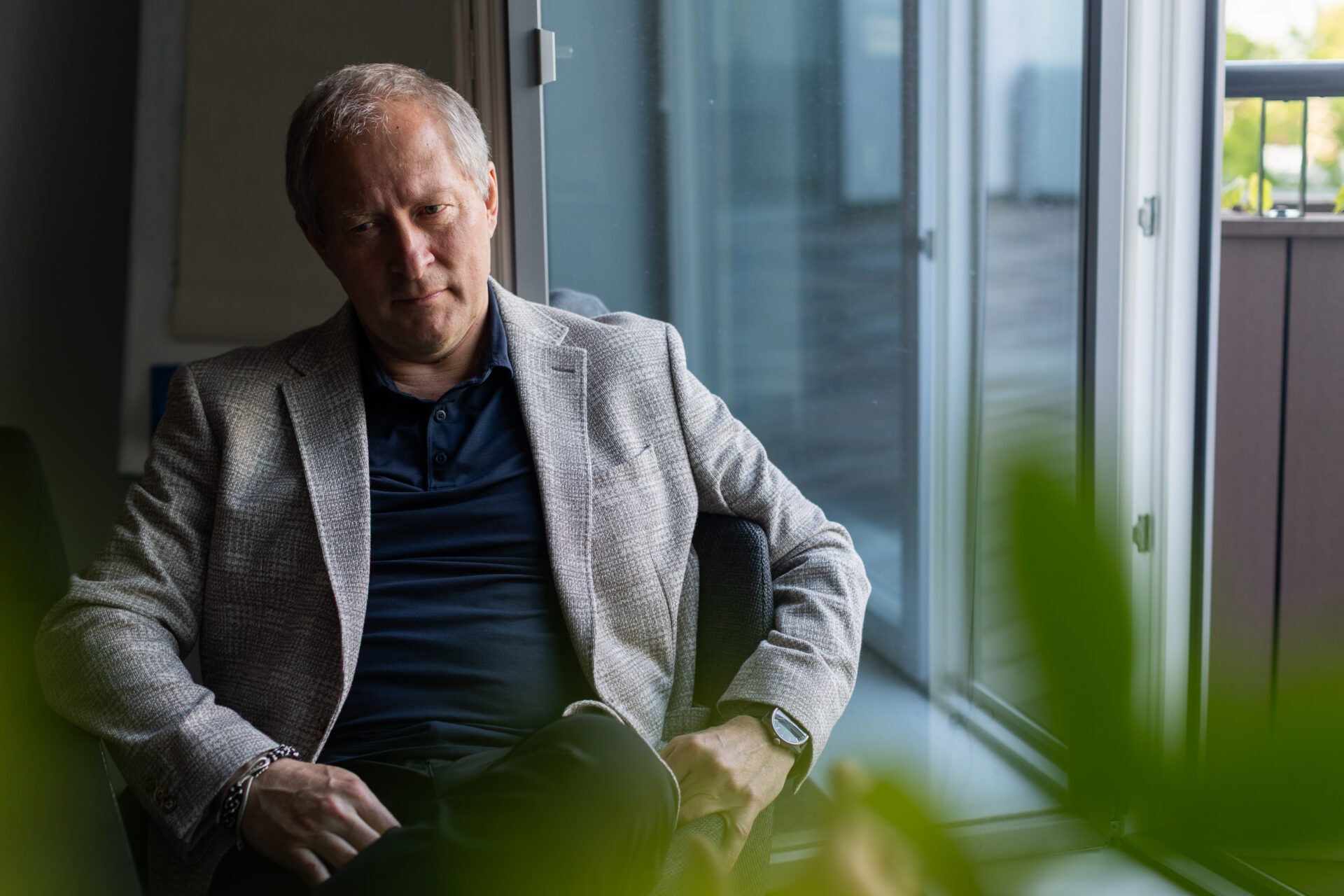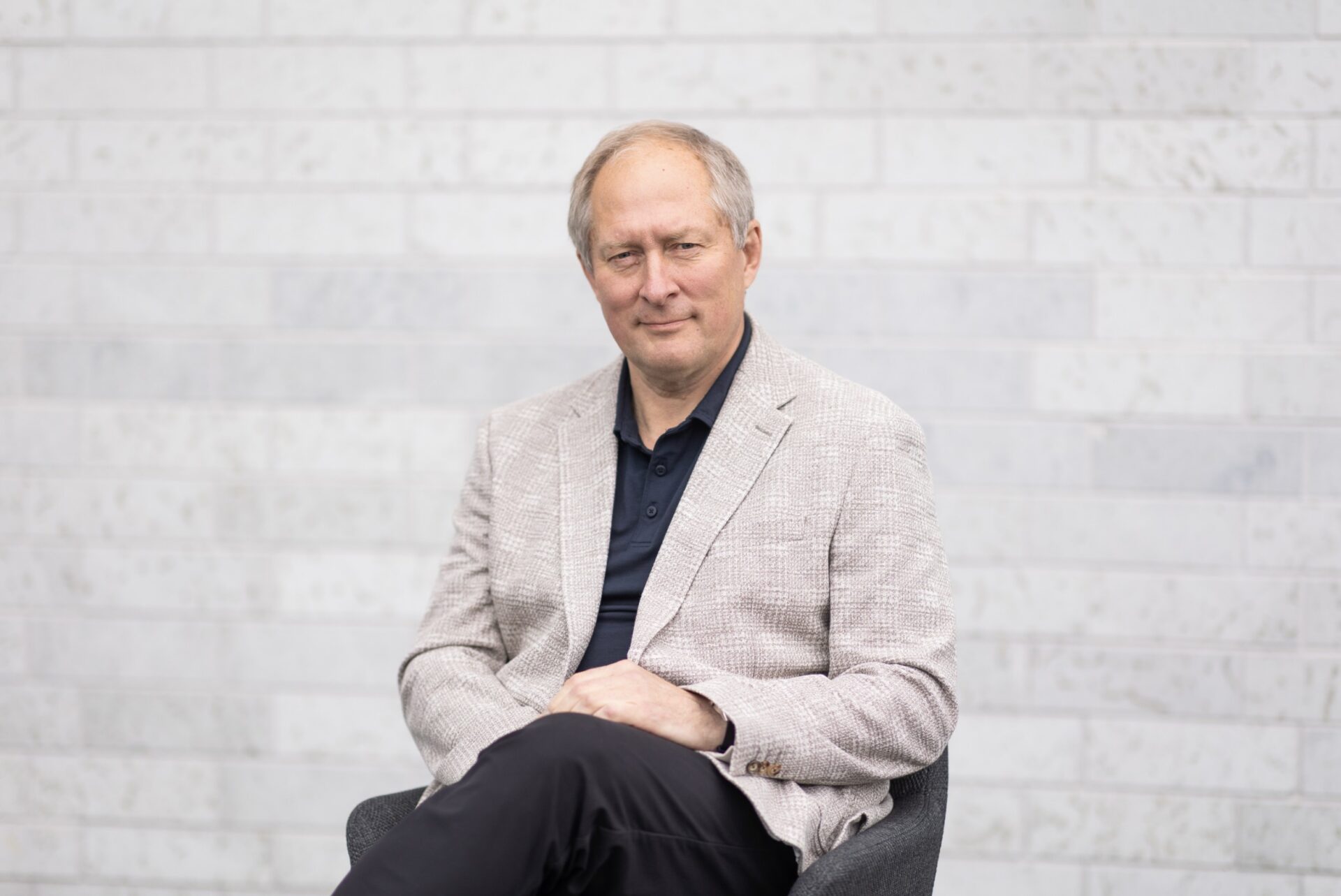
You come from the private sector. What is working well in Estonian healthcare today?
The funding model works – 13%. It is stable, it moves with the average wage and it reflects inflation. Whether that is too little or plenty is a separate question. Whatever the public image, Estonian healthcare is in fact reasonably accessible to people here compared with the Nordic countries, for example. I say that from personal experience.
And what worries you?
The biggest problem in Estonia today is probably getting a diagnosis in time. Once the diagnosis is there, our medical machinery works well. But there are also specialities where a shortage of doctors has already appeared – psychiatry, for instance.
What makes leading a hospital different?
This is an organisation of specialists, and as a leader you have no legitimacy unless you are a specialist yourself. Leaders position themselves as the sharpest minds in their field, but they do not position themselves as leaders. In the private sector, you would start training those people straight away. I am not saying a leader has to become a generalist – no, that costs them trust – but this is the biggest difference from the private sector today.
When your term comes to an end, what would you want the hospital’s people to say about how its leadership has changed?
I would like to answer that it has become more open and more transparent, but I am not sure that sense of it will reach people in that time.
What does openness mean to you?
That when decisions affect particular people, those people can be involved – and are. Even when the decision is a negative one. Openness also means being open to new people, not just to new ideas. Our staff turnover is 2.5%. I am not thinking only of Tallinn and Tartu, but of Europe and America more widely. I would like to see more international specialists here, and more of our own people going abroad. I want people to say that this has happened.
What is your most important expectation of leaders at every level of the hospital?
Right now, the heads of every unit, all the way up to the clinic directors, are both clinical specialists and leaders. I want them to be better at positioning themselves as modern leaders – creating a vision, involving people, discussing results and so on. I want them to be able to build a team and shape its identity, and to do it consciously. I would like us to get to the point where that is the new normal.
How do doctors who lead find the time for it?
There are two options. Either the leader takes that time, or they accept a poorer working atmosphere. In the second case, you have to accept new solutions – for example, that the doctor makes the medical decisions while the administrative leadership decisions are taken by someone with a nursing background. The key question is how they create the vision and the substance together.
Do you agree that either way it comes down to a decision? That a doctor who leads also has to decide whether their role is to be there for their people or not?
For doctors today it is not simply a matter of deciding. The fear is that their clinical expertise will suffer. Perhaps there is also a fear of giving things away, because you get praised for what you are good at.
Does the whole suffer under the four-year management agreement model, and if so how – is it sustainable?
The four-year cycle makes sure that no leader stays in post forever. Every leader has a duty to act quickly. The problem is how far ahead a leader looks – your horizon in the role is four years at most, which means we are constantly working in the short term. It is also important to understand that when a unit gets a new leader, having the previous leader stay on in the same unit is difficult for them. Both the old and the new leader continuing in the same unit is something people have to get used to, otherwise the system cannot work. But I am not sure that will happen easily. It is especially hard for new, young leaders.
Let’s turn to the leadership programme. It is about a year since we spoke on the phone about your wish to create a format that would get your leaders speaking the same language. Much of the programme’s focus has been on awareness rather than leadership techniques. How did you arrive at the idea of getting leaders talking to each other about leadership?
We had an employee in one of the smaller units who said: there you are on Zoom talking about results and contracts, and our job is just to listen and get on with our work, but we have no idea why we need that Health Insurance Fund contract, or whether we need it at all. That surprised me, and I started looking into it. It turned out that nobody was interpreting or explaining the results of the hospital as a whole to people, or how their own unit’s work connects to it. That led me to the thought that we need a shared programme where we make sense together of how units are led here.
The satisfaction surveys show that some people experience bullying at work. When people cannot see their unit’s role in the bigger picture, they become indifferent to one another, and sometimes negative. When people who work together understand their role in the same way, identity and a sense of having each other’s back emerge.
The most important leaders to work with are the ones closest to the patient in their daily work. I would once have said the ones closest to the cash flow. Today it is different. They are the people who deal with patients and colleagues every day. Identity matters – the sense that I belong to the group I belong to. On bullying, we need to build the skills to resolve conflicts in line with our values.
As we designed the programme, we looked for a way to teach people to think about how they position their unit, what their tasks are and how those tasks are carried out. How do you get people to feel proud of what they do together as a team, and to learn to resolve problems in line with our values? That is how we came to you.
In our programme, your introduction speaks to frontline leaders about values and culture. Why do they matter to you?
Everyone learns through personal experience. For a very long time, the whole subject of values felt to me like internal corporate rhetoric that nobody takes too seriously. At one point in my career, though, I realised that you cannot keep strong specialists whose values do not fit the collective for very long. Sooner or later those people leave because of conflicts with their direct manager, their colleagues or the employer more broadly. However cynical the group of people I have worked with, the moment we start discussing people’s role in the collective, belonging and skills, everyone lights up and wants to have a say. Identity matters. It can be created and shaped together, as long as there is a defined need and a clear goal.
It is a problem when people in an organisation feel that some third party somewhere has drawn up a set of declarative values they now have to fit themselves around. Authenticity and involvement matter enormously in the process of agreeing on values and taking them on board. When the process does not feel declarative, it is far easier for people to connect with it and think along. And it is much easier for a leader to pass values agreed in that way on to a new employee, for example. It also makes it easier to handle the situations where an employee says the organisation’s values do not match their own.
If the agreed values do not fit at all, then, as I said, the person should leave. But if those values do have a place of their own in that person’s hierarchy of values, it is possible to move them consciously further up – and then it is not a matter of giving up who you are.
One group of your leaders has completed the training. What changes have you noticed?
I don’t work with them day to day, but I have been invited to departmental events to talk about values. The main shift is that we — read: the senior leaders — have been asked: you expect us to lead in a new way, so why don’t our own leaders do the same? That is exactly why we are trying to extend the programme right through the leadership chain.
It’s hugely valuable that you come and take part in those group conversations with us yourself. What has caught your eye or your ear?
Even though we are a very large organisation by Estonian standards, I would still expect the different parts of the organisation — read: the hospital — to know each other better. It has been surprising that leaders don’t know what is going on in the next room. I have heard one clinic say that we have no idea what they are doing with our patient over in the other building. That is astonishing! In a specialist’s world, where “I” matters, the sense of also belonging to a collective is far too weak. Growing that feeling of “we” is something we will have to keep working on deliberately.
What would you recommend to other hospital and clinic leaders?
The key thing is that when you appoint a leader from among your specialists, you have to consider their personal qualities and values alongside their professional ability. It is important to establish how they position themselves: do they see themselves as a specialist or as a leader? In medicine, both of those ambitions need to be present, and in balance, in anyone aspiring to lead.
Is there anything we haven’t asked that you would like to say?
I would emphasise one more thing: whatever we do or decide, we have to understand that it all begins with mutual respect. That is often forgotten. You shouldn’t even allow yourself to think that another person is stupid, because that thinking shows up in your behaviour and it shows. It is like raising a child — a particular behaviour may be foolish or hard to understand, but never the person themselves.
One problem in the medical sector is that there is too little mobility and flexibility. Somehow we manage to burn far too many medics out completely at the peak of their careers, in their early forties, until they start looking for a way out. It shouldn’t be like this. We should find ways to offer people more room to grow and develop, so that the main career prospect alongside clinical work isn’t simply rising to an administrative post. That ties in with my earlier point: we should open our medical system up more to the wider world, give our doctors more opportunities to spend time abroad, even temporarily, and bring more international experts here. Everyone would gain from it — patients, healthcare staff and the system as a whole.
Author: leadership coach Toomas Tamsar PCC
Photo: Tartu University Hospital