
Home for healthcare Changing culture and renewing values
changing culture and renewing values
In healthcare there is one area for development we hear about again and again in our work – people want to improve the culture. Whether that means how well people work together, toxicity, authoritarian and hierarchical behaviour, speaking badly to one another or something else.

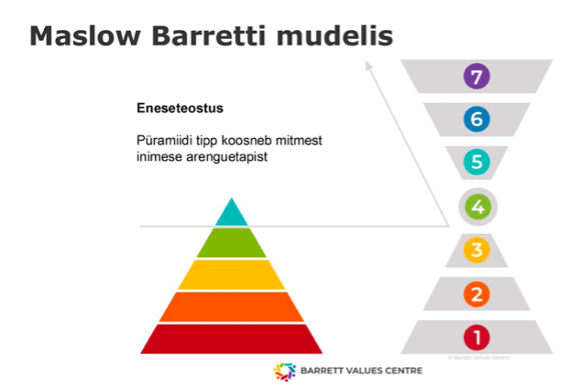
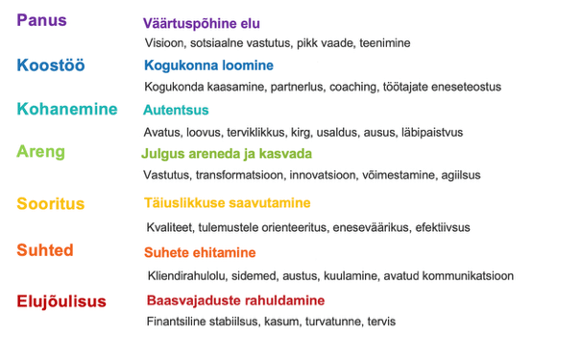
The Barrett Model® is inspired by Abraham Maslow’s hierarchy of needs and has been tested over more than twenty years in thousands of organisations. It sets out seven domains, or levels, that connect to form the motivation within people. Starting with basic needs and reaching all the way to the well-being of future generations.
It is a model that unpacks the values of employees, leaders and stakeholders, and helps you understand your organisational culture. More than that – it offers tools for supporting the cultures that exist within and between units, and for building more effective relationships that serve a deeper purpose right across the organisation.
The Barrett Values Centre’s seven levels of consciousness help leaders understand their organisation’s culture and develop it in service of the strategic goals, so that the organisation’s values are part of everyday life.
With BVC we produce culture and values reports for organisations that help assess and compare people’s personal values, the organisation’s current values and the cultural values it wants.
The Barrett Model
About the training
what do we do?
We start with values. Values are the foundation of culture.
- We help you agree your values.
- We recommend first finding out what the current culture and values really are (finding out, not guessing through the leader’s eyes).
- Then agreeing which values you need.
A great many organisations stop there, because the work that follows takes real effort. Values and culture cannot be trained into people or “sold” to them, they have to be led. Usually we help you do this through leadership team workshops running over at least six months, in which we discuss and agree the goals, the measures and the actions.
Leading culture is always a bespoke process.
It is worth remembering – a strategy very rarely succeeds without a culture to support it. There is no such thing as the right culture – it has to be led in exactly the same way as the business.

what you gain:
- you gain a clear picture of your existing culture, values and dominant behaviours.
- you understand whether there is entropy in the culture, and how much – the behaviours that block development and create destructive energy in the working environment.
- you understand what people really want to experience in their working lives.
- the programme delivers a map of where you stand and a plan of work for embedding new values and behaviours that support the company’s development and its strategic direction.

In the first stage we look at where your company or team is today. Which values and behaviours genuinely dominate the culture, compared with what is on the wall or in the strategy document. How much those values and behaviours have in common with people’s personal values. We run a culture survey. The culture survey can cover the whole company, a single team or the leadership group, exactly as your organisation needs.
The second stage focuses on interpreting the results, identifying the points that matter and agreeing an action plan. Changing culture always calls for behavioural change, and that starts with a change in the behaviour of the leadership group. The second stage can also include a stakeholder survey, exploring which behaviours the organisation’s main partners experience in day-to-day contact.
The third stage is running a workshop, either across the organisation or with the leadership group. Then building an action plan and setting the measures. Followed by regular check-ins on “how are we doing?”.
How does it work?
Kick-off
Outcome: Everyone is clear on what will happen and how much time the programme takes from each person. The stakeholder groups to be involved are chosen.
Interviews
Outcome: Our trainers interview members of the leadership team and representatives of selected stakeholder groups to understand the strengths and the weak spots of the organisation's culture.
Running the survey
Outcome: The culture survey gives you an overview of the main visible behaviours and values in today's culture, how these relate to people's personal values, and what people expect from the culture of the future.
Workshop to interpret the results
Outcome: A shared understanding of how culture is measured and assessed, and of the strengths and weak spots in today's culture. The results are examined through the lens of reaching your strategic goals, and you assess which behaviours the culture needs to build or strengthen to get there.
Additional workshops if needed
Outcome: Regular workshops where needed, looking at how the organisation is doing and how well the changes have taken hold. Sticking points are discussed and worked through, and agreements are made.
Summary
Outcome: A reflection on the final result. The goal set for the team has been achieved.
trainers
Kristiina Tukk PCC
Professional executive coach
Barrett certified consultant
Kristiina brings over 20 years of leadership experience from both telecommunications and the financial sector. Under her leadership, the well-known information line Ekspress Hotline became Nobel Digital, which in 2019 was named Estonia’s most successful digital media agency. Today Kristiina is one of Nobel Digital’s leaders, a partner and a certified leadership coach.

Toomas Tamsar MCC
Master certified coach
Barrett certified consultant
Toomas’s track record as a senior leader is enviable (Tööandjate Keskliit, Pärnu Konverentsid, Tallinna Kaubamaja, Kaubandus-Tööstuskoda). He is one of Estonia’s most respected leadership coaches, and he shares what he has learned over a long and successful career with senior leaders in both the public and private sectors.
The From doctor to leader training focuses on developing self-management and team leadership skills.
In the team workshop we analyse why a team is not working and agree on the changes needed.
The development programme helps teams become more effective through clear communication and clearly set goals and priorities.
In the culture survey we examine which behaviours and values dominate in the company today, and build an action plan for change.
In the workshop we build the foundation for new values and give them substance through behaviours everyone understands in the same way.
The training brings key stakeholders together to shape the organisation’s mission, vision, values and strategy.
Elina Siimon
“The coach’s help is valuable precisely because I reach the answers myself, by analysing the situation. Answers that align with my own convictions and values.”
James Woodeson
“The coach’s main role was understanding and belief in me — that I would manage — not stepping in and doing it for me.”
Agris Peedu
Coaching gave me, as a top executive, the opportunity to address the issue in the presence of an experienced advisor – a coach – and with someone from outside the organisation.
Edith Mihkelson
„The essence, tools and practices of coaching leadership open up a whole new world for me as a leader and for the entire company. Inspiration, engagement and spotting new perspectives give us immeasurable potential to develop powerfully together with the team, using resources that are right in front of us but which we never thought to notice or use before coaching. We are on a journey that creates value both for the people of Kooker and for the whole community.“
Kadri Mägi-Lehtsi
“Coaching helps you move forward both at work and in your personal life.”
Mihkel Tammo
“Don’t expect the coach to know better than you do and tell you what needs to be done, but a genuinely experienced, high-calibre coach will help you put yourself to the test.”