You decided to renew Tervisekassa’s values. What did you really want to achieve?
Rain Laane: To understand why we took on the values work, you have to go back a little. A solidarity-based health system is a very powerful idea for Estonia. But when the Estonian Health Insurance Fund became the carrier of that system in the late 1990s, what got built was an institution of THE TRUTH. Because the people working here were clever, serious people who knew exactly how healthcare should be organised. How many treatment cases, in which hospital, on which day? Money was allocated on precisely that basis. The system was used to it, though whether it made anyone happy, I don’t know. We increasingly felt that the system did not support the individual: as the Health Insurance Fund, we were used to acting on behalf of the system rather than on behalf of people.
That realisation set the change in motion. The question “who do we exist for?” became the starting point of our culture change. It began a long journey that led us to rethink our values, mission and vision.
We didn’t dare take the change on alone, so we ran a tender and chose ourselves professional partners.
Six months of work later, we finally reached the result we had hoped for. I would even say it exceeded our expectations. The best part was that along the way we tore our hair out more than once, wondering how on earth we would get there. We wandered down some very distant paths.
What kind of cultural change were you looking for?
Rain Laane: We had a strong desire to move from a strict hierarchy to an organisation where people feel they matter — both our employees and our clients, the people of Estonia. A considerable part of our team changed during that journey. The culture did not shift overnight, but once we had our direction and expectations settled, putting the values into words again was the logical next step. Right before approving the new development plan, so that we could move forward on a clear foundation of values.
We used Richard Barrett’s methodology, which holds that values actually reflect needs. Had your organisation’s needs changed significantly?
Rain Laane: Very much so. Our needs had changed over time — and not only ours, but those of Estonian society as a whole. Expectations of health, and of how and how quickly people get help, are completely different now. Health is no longer seen only as a problem to be solved, but as part of life to be protected and valued.
Let’s start at the beginning — why and how did you choose these particular words?
We debated for a long time whether we needed a separate mission and vision, or simply one message that captured the essence of the whole organisation. In the end we arrived at two separate sentences — but sentences that speak to the heart.
Our vision turned out simple and beautiful: People in Estonia live in good health for longer. There was even a heated debate in our team about the word order — “longer in good health” or “in good health for longer”? In the end we chose in good health for longer, because that is what we genuinely want to achieve: more years lived in good health.
Our mission, what we do every day, was put like this: Wisely shared healthcare funding to protect your health. Every word in that sentence was chosen. We share money — that is an honest admission. But wisely carries experience, knowledge and foresight. And to protect your health underlines that we are not doing this for the system. We are doing it for every individual.
Tell us how the values were chosen. What are they, and why these?
Rain Laane: Once the mission and vision were in place, the cherry on the cake was left — the values. We wanted them to be clear, distinctive and meaningful. Not merely slogans.
The first value – Passion. That was a discussion in its own right. Some felt passion was too “personal” and that it should be “commitment”. But we stuck with “passion”, because passion is contagious. We do things with heart and soul. Interestingly, it was passion that won the most support in the later employee survey.
The second value – Openness. Our mindset: I speak honestly and I listen for real. That means being ready both to be honest and to listen. Many new employees have said that openness is exactly why they joined Tervisekassa.
The third – A clear direction. This was one of the trickiest discussions. Does it mean the vision? Priorities? Or simply knowing what is right? In the end we realised that a clear direction means making conscious choices — even uncomfortable ones, as long as they serve the interests of the people of Estonia. We act with the long view in mind.
The fourth – Freedom and responsibility. We took this value on board long ago. We trust our people to make decisions — but we also expect them to stand behind them. We don’t look for someone to blame, we look for solutions. When something goes wrong, we put it right, learn and move on.
Together these four values spell the Estonian word KASV — growth. A symbol of our wish to grow, to develop, and to do it together.
Some schools of thought say values should come from the leadership team, not from the organisation. You chose to involve people. Why?
Involving people was the only possible route. Around 40% of the organisation took part in the working groups, entirely voluntarily. It wasn’t easy, but it created meaning. When someone has worked out for themselves what the values mean, they feel far more ownership of them. Our goal was not to produce slogans that would please everyone; we wanted values that people would genuinely take on board.
We had a very good working relationship with the partners (Kristiina Tukk and Toomas Tamsar). Thanks to them, involvement was never a mere formality but a genuine process. In some places they let us argue it out; in others they nudged us forward at exactly the right moment. Without them, this would never have come together so well.
What happens next? How do these values come alive — surely announcing them is nowhere near enough?
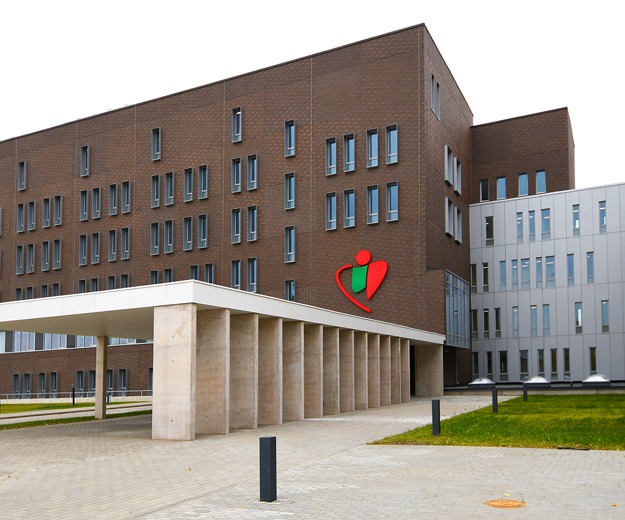
We started with personal stories — every leader talked about what the values mean to them. People listened, engaged, understood. We share colleagues’ value stories, tie the values to our annual goals and hand out values-based awards at our summer days. This is not a campaign — it is a new habit. And of course we are putting our values somewhere visible, right by the entrance.
What would tell you, two years from now, that this work paid off?
When the agreed values are used to make decisions — when we can say we decided this way because it fits our values. And when they help us understand better why one choice or another is the right one: then they are not just words, they are tools.