
„Do I choose soft or tough?“
„How can I be soft on my employees and tough at the same time – because otherwise they simply don’t get things done?“
I have come across this question many times, in many different wordings. Often it hides the belief that younger generations can no longer be led the old way, with a firm hand and hard orders. Or the thought that you would like to be kind and pleasant with people, yet things start to fray, and then it seems you should take a sterner line again – and that doesn’t work either.
To work through this question — and plenty of others where the goals look like opposites — I have developed the “axes method”. For anyone who was comfortable with maths at school, what follows is a fairly simple piece of pseudo-mathematical reflection.
Most of the time we place seemingly opposing goals on a single axis. Something like this:

On this axis, the softer you are, the less tough you are, and vice versa. This is usually where people look for the balance.
Step 1:
Think about whether the axes are actually named correctly.
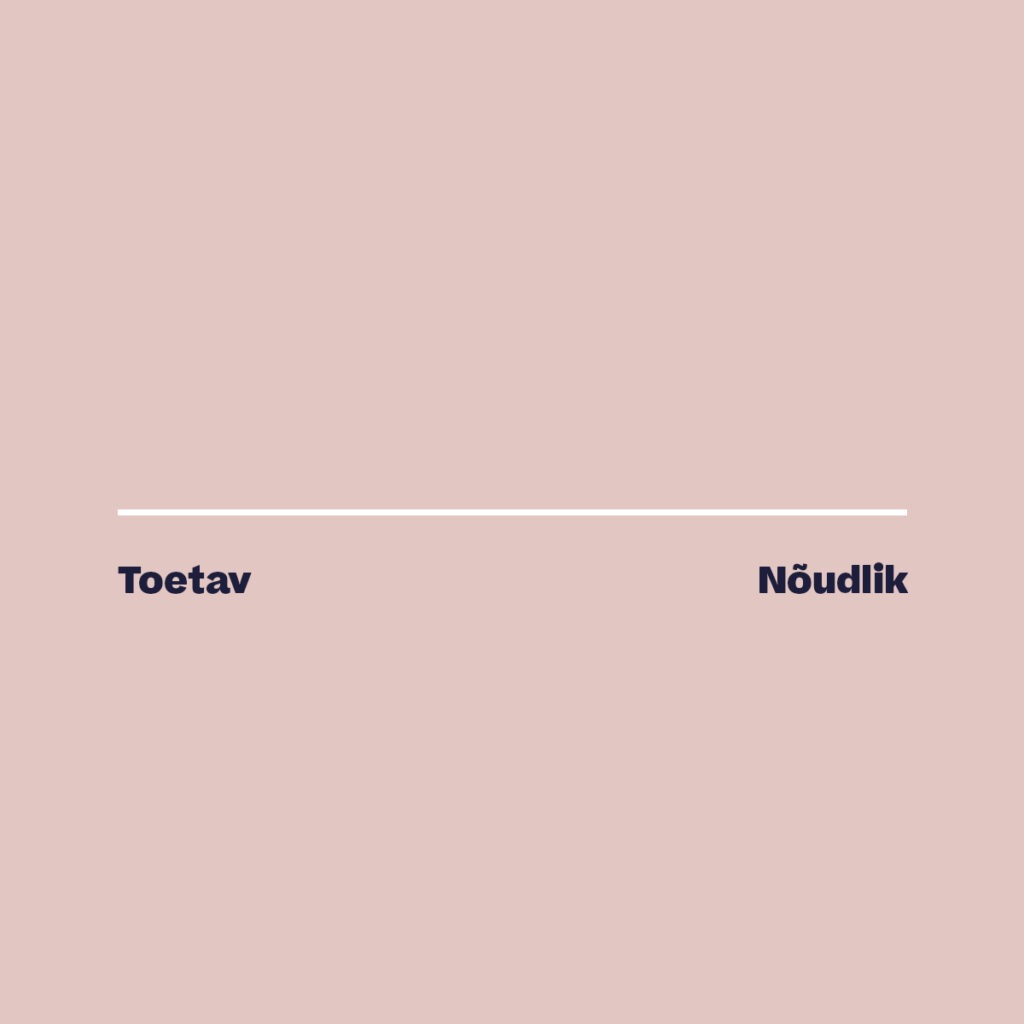
In this case, what people usually mean is not so much tough as demanding. And not soft, but rather supportive or well-intentioned. So we get a new axis:
Step 2:
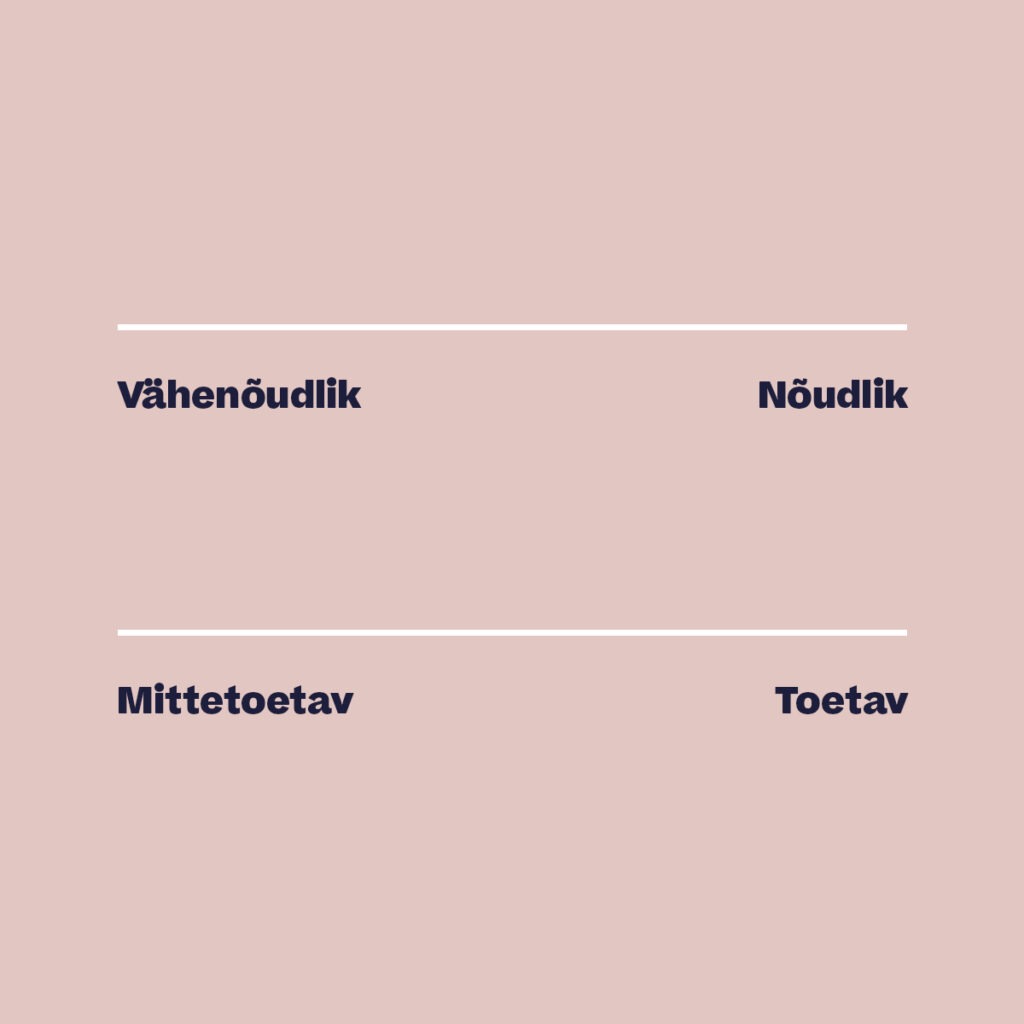
Now let’s work out what the real opposites are. The opposite of demanding is not supportive — it is undemanding. The opposite of supportive is unsupportive or indifferent. So instead of one axis, we have two.
Step 3:
We move from a one-dimensional picture to a two-dimensional one. To do that, we replace the single x-axis with two axes, x and y. Like this:
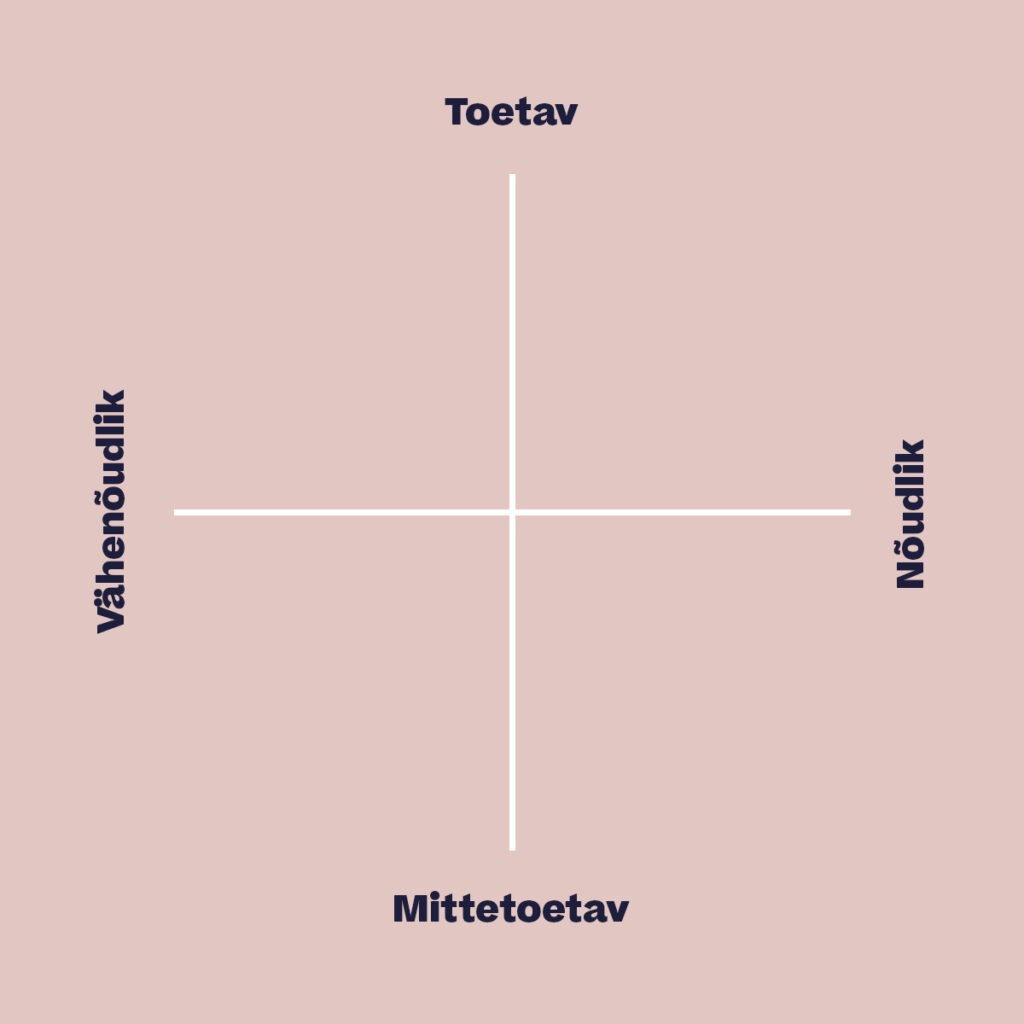
With this step we already break out of the single-axis mindset that forces choices and sacrifices on us that we don’t actually have to make. In the new picture we can choose freely in two directions. Here it is easy to see that we want to be supportive AND demanding.
Step 4:
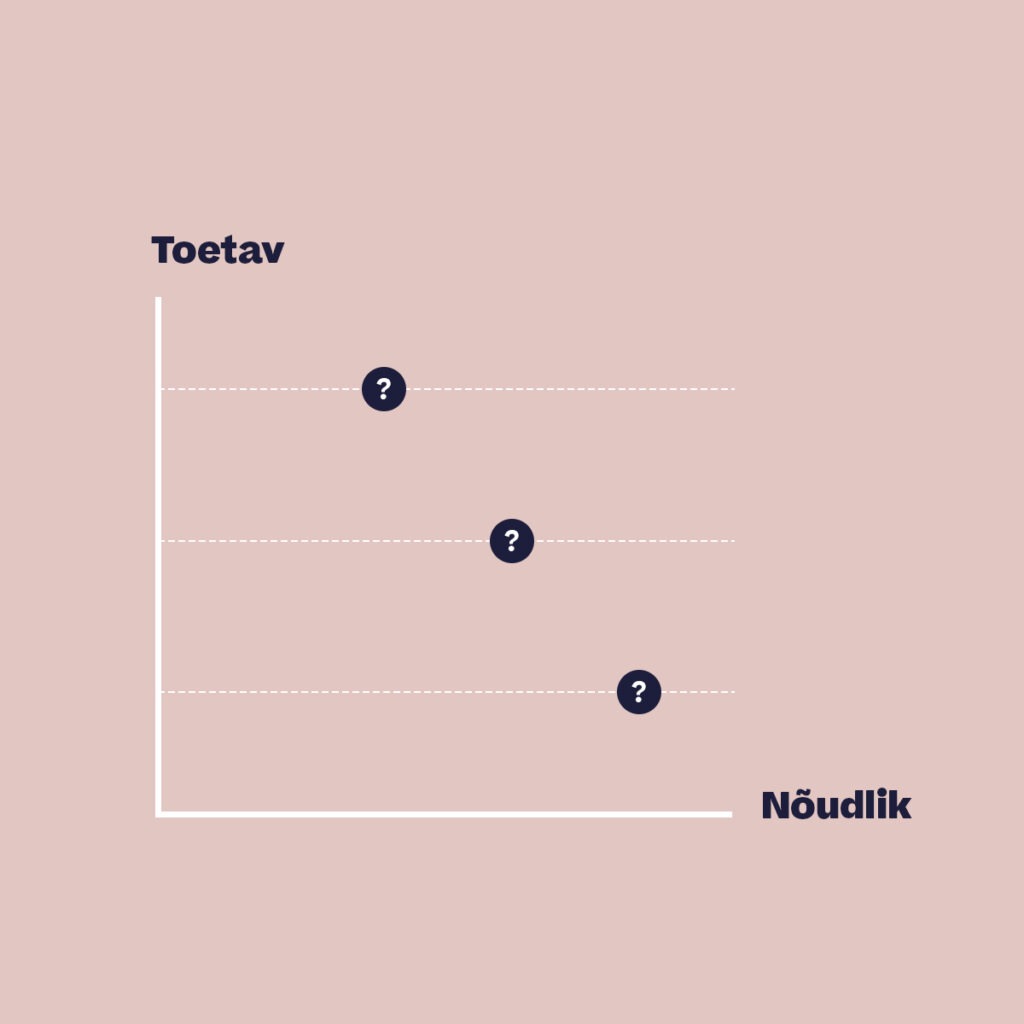
Now that achieving one no longer means giving up the other, choose exactly where you want to sit on each axis to get the best result for you as a leader.
First of all, it depends on you. What fits your leadership style? What does your team need? What is too little and what is too much? Being too undemanding usually means things simply don’t get done. But being too demanding can leave people stressed and burnt out (and it is worth asking yourself whether you meet your own standards of demandingness).
Step 5:
Think through what you need from yourself and from others in order to reach the result you have set. For example, to be more demanding of myself and my employees, I need to be more disciplined and to follow interim results more closely, along with deadlines and quality requirements. Or, to be more supportive, I need to take a regular interest in what my people are doing (and always ask in our 1:1s how things are going and what support they need).
At this point you are probably tempted to ask what the “right place” on these axes actually is. Sorry, but as a coach I have to say that you must decide for yourself — I simply don’t have the right answer. Demanding a lot and supporting a lot is better. But how much of each? That is something to ask your colleagues and yourself. And then decide.
If you want to develop as a leader in a way that gives you the rod rather than the fish — so that you are always ready to find solutions to problems by realising your own potential — Nobel People can help. We offer both one-to-one and team coaching.
Author: Toomas Tamsar PCC, leadership coach